D uses the notes D, F#, A. This left-handed chord chart uses DADGAD tuning.
Three playable chord shapes
All three charts use DADGAD tuning. Compare the named shapes and choose the one that fits your chord change. These are alternatives, not a progression.
Tuning, lowest to highest: D – A – D – G – A – D. Chord names describe the notes that sound in this tuning.
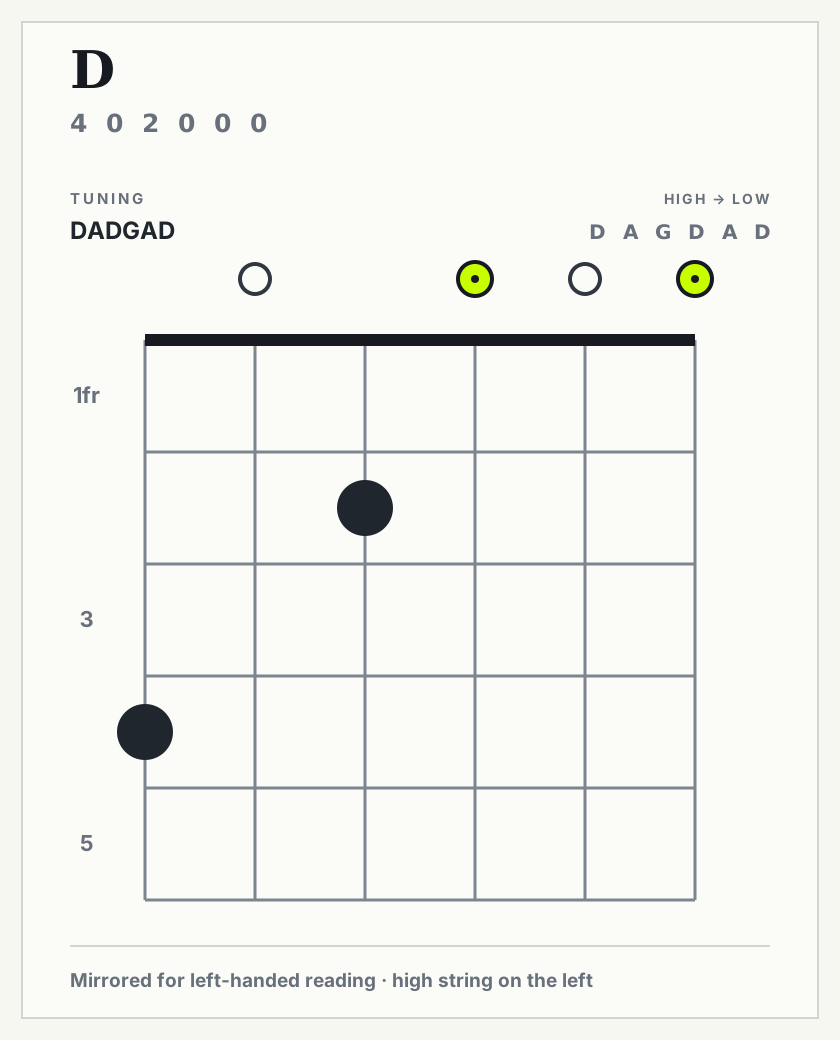
Shape 1
Open-string voicing
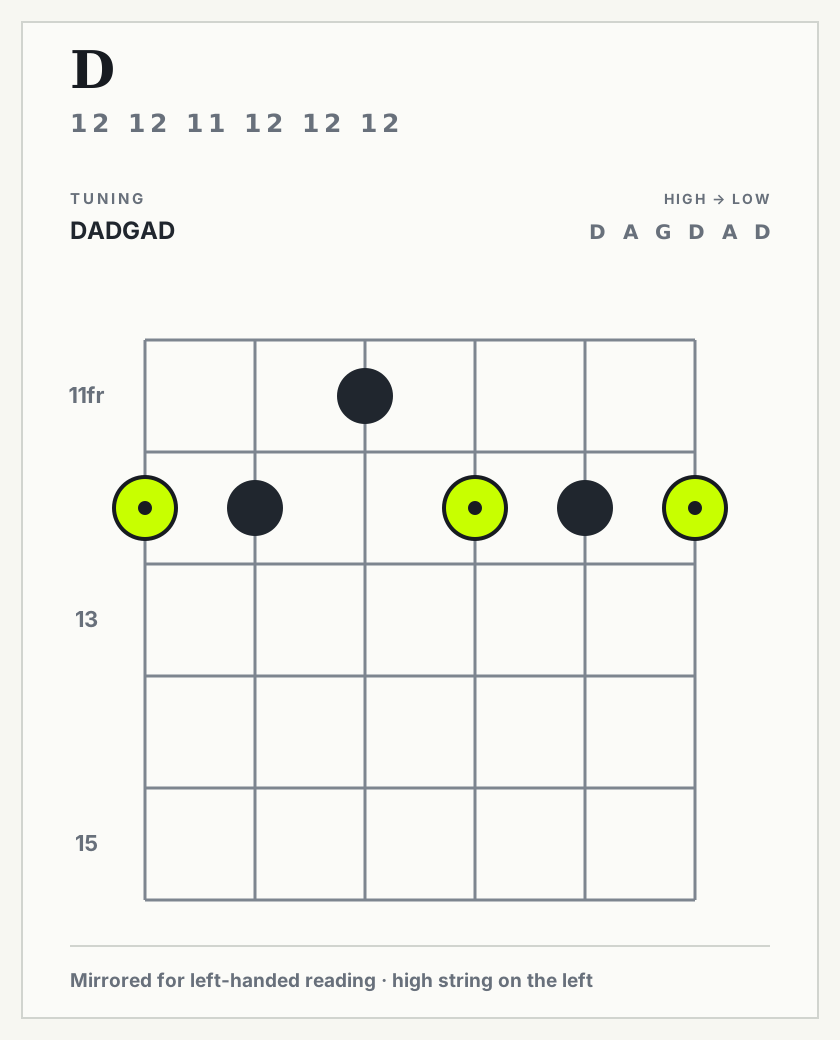
Shape 2
Compact voicing · fret 11
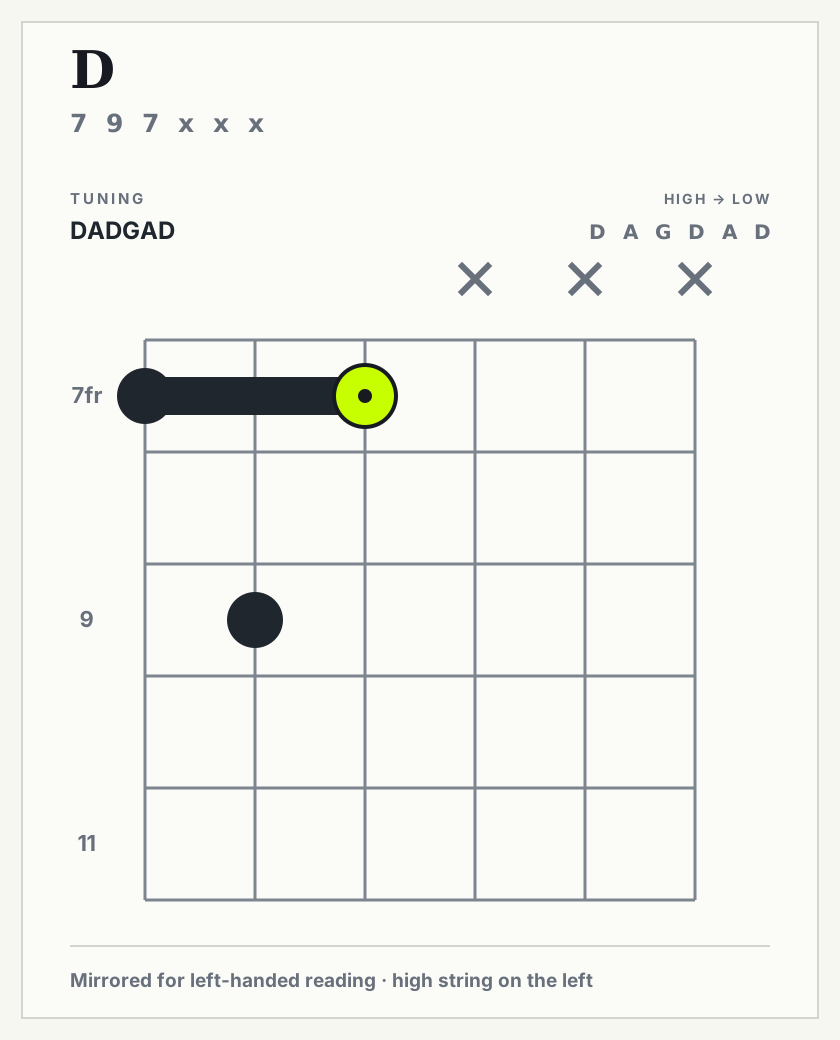
Shape 3
Compact voicing · fret 7
What you are playing
Chord notes: D, F#, A. Formula: 1 3 5.
Practise it for ten minutes
Form the shape without strumming, check each intended string, then release and rebuild it five times before practising slow four-beat changes.
- Shape Type: This is an open-position voicing, so the nut and open-string markers matter as much as the fretted notes.
- String Check: Let A (string 2), D (string 4), A (string 5) and D (string 6) ring open, fret D (string 1) at fret 4 and G (string 3) at fret 2.
- Grip Control: Keep the fretting hand relaxed and let the mirrored chart show you which notes need the clearest pressure.
Scales to try with this chord
These scales contain this chord’s notes in the same tuning. Start with one and listen for the chord tones.
Explore these chord tones on the fretboard · How to read the chord charts · Check your tuning · All chord charts by tuning