
G7 uses the notes G, B, D, F. This left-handed chord chart uses C Standard tuning.
Three playable chord shapes
All three charts use C Standard tuning. Compare the named shapes and choose the one that fits your chord change. These are alternatives, not a progression.
Tuning, lowest to highest: C – F – A# – D# – G – C. Chord names describe the notes that sound in this tuning.
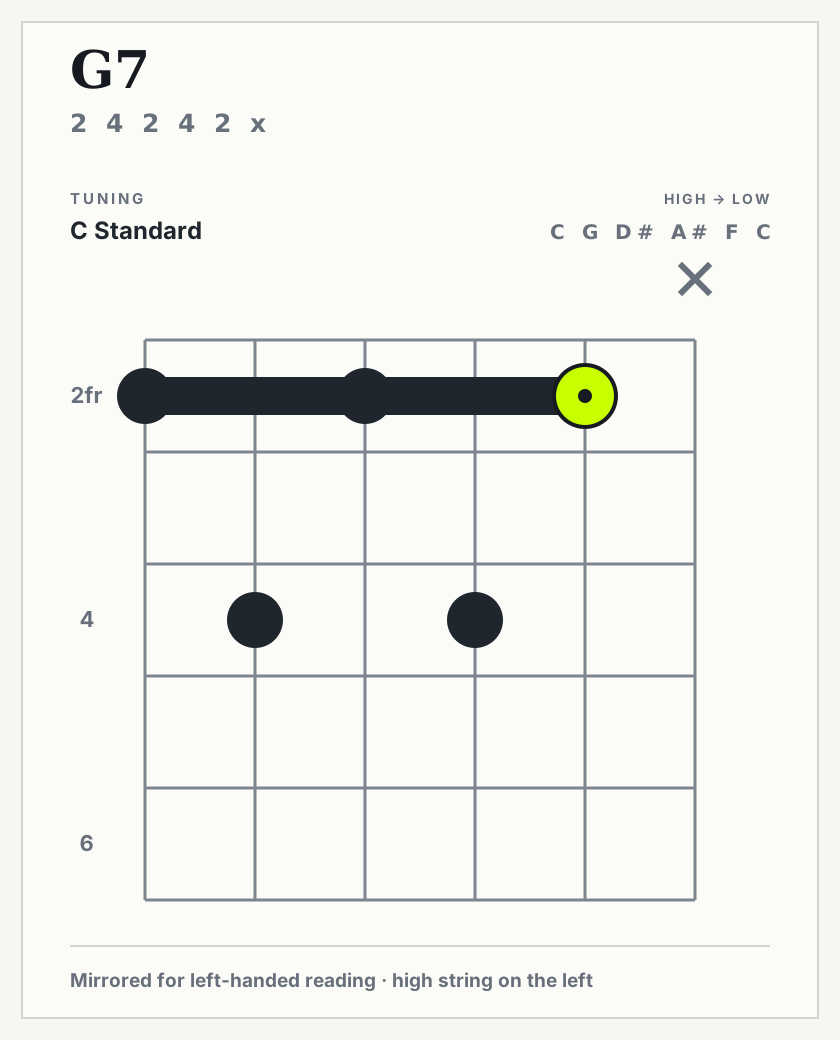
Shape 1
A7 shape · fret 2
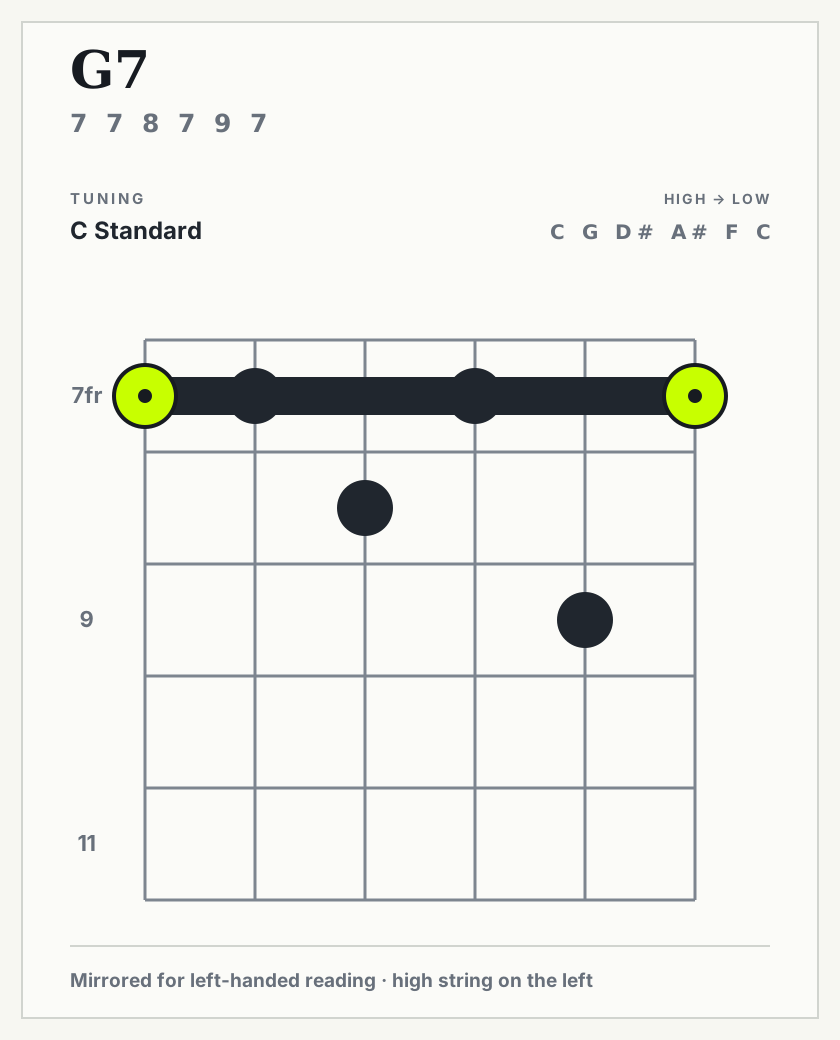
Shape 2
E7 shape · fret 7
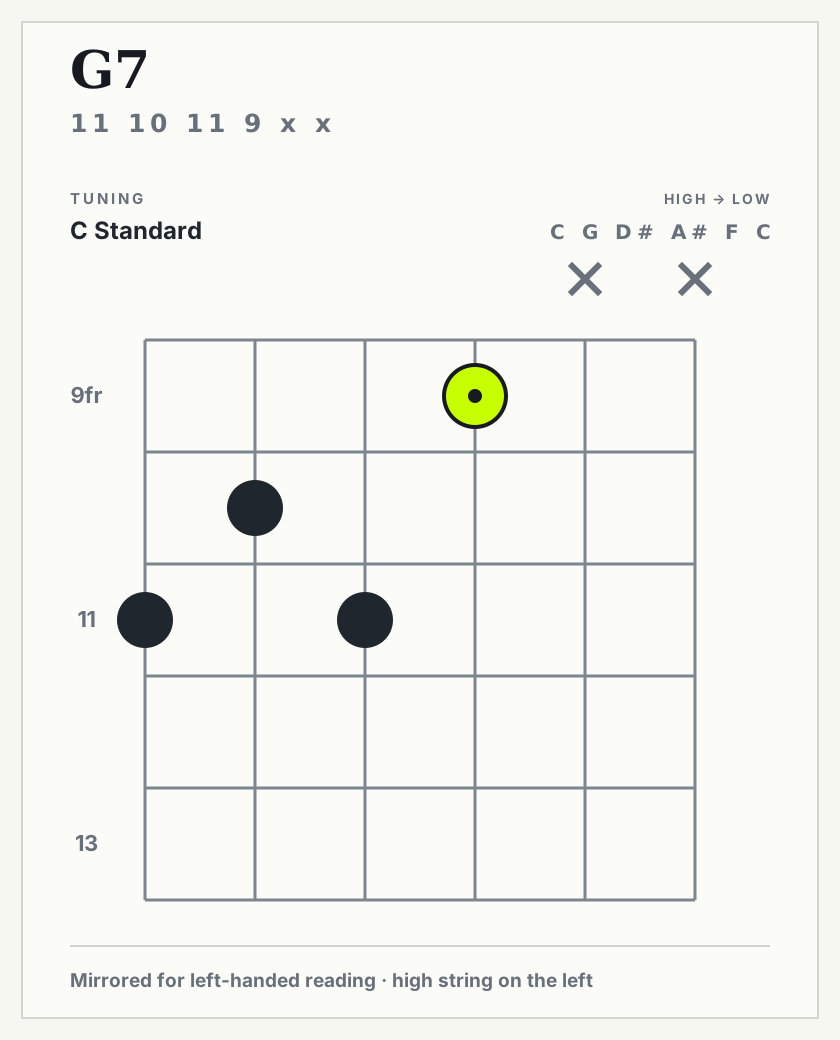
Shape 3
D7 shape · fret 9
What you are playing
Chord notes: G, B, D, F. Formula: 1 3 5 b7.
Practise it for ten minutes
Form the shape without strumming, check each intended string, then release and rebuild it five times before practising slow four-beat changes.
- Shape Type: This shape behaves like a movable barre-style grip centered around fret 2, so focus on even pressure before trying to change chords quickly.
- String Check: Fret C (string 1) at fret 2, G (string 2) at fret 4, D# (string 3) at fret 2, A# (string 4) at fret 4 and F (string 5) at fret 2, mute C (string 6).
- Grip Control: Mute deliberately with the picking hand because dominant shapes often invite extra noise from open strings.
Explore these chord tones on the fretboard · How to read the chord charts · Check your tuning · All chord charts by tuning