
F# Phrygian in Half Step Down tuning uses F#, G, A, B, C#, D, E. The highlighted notes show F#, the tonic. Start with the displayed fret range and practise a short phrase that returns to F#.
Explore the scale
Choose a fret range to see its notes and matching TAB. These are fret windows, not conventional numbered scale boxes.
Formula: 1 b2 b3 4 5 b6 b7.
Frets 0–4
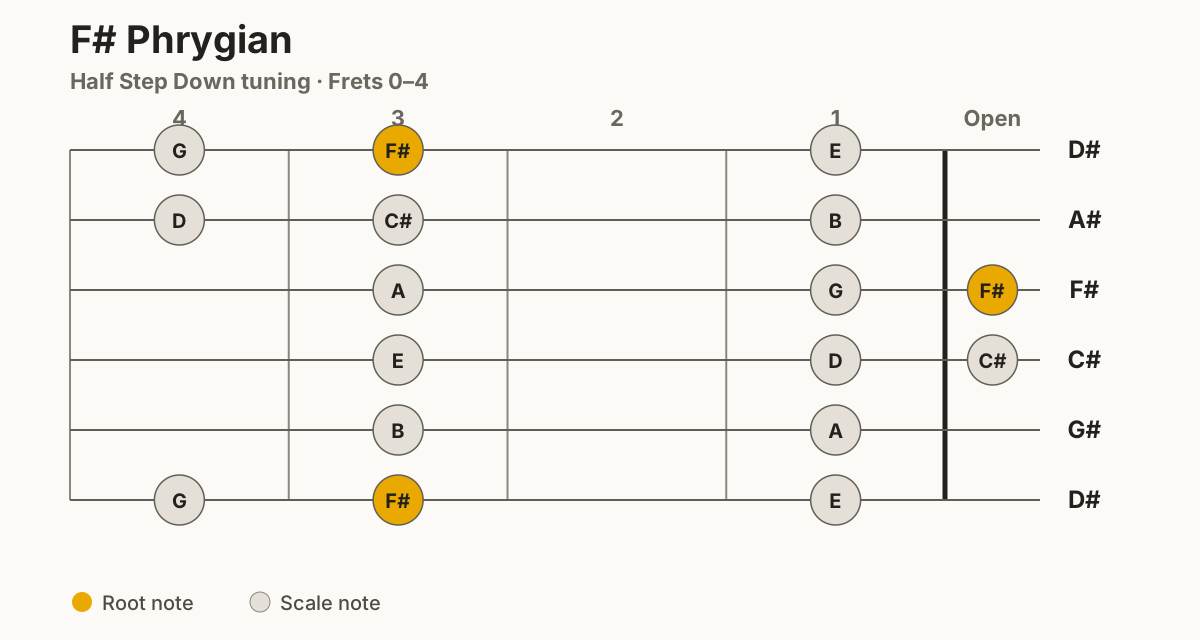
The TAB lists the shown note positions from low to high. Repeated pitches are different string positions. The highest-pitched string stays on the top line.
D#|------------------------------------------1--3--4--|
A#|---------------------------------1--3--4-----------|
F#|------------------------0--1--3--------------------|
C#|---------------0--1--3-----------------------------|
G#|---------1--3--------------------------------------|
D#|1--3--4--------------------------------------------|
Frets 5–9
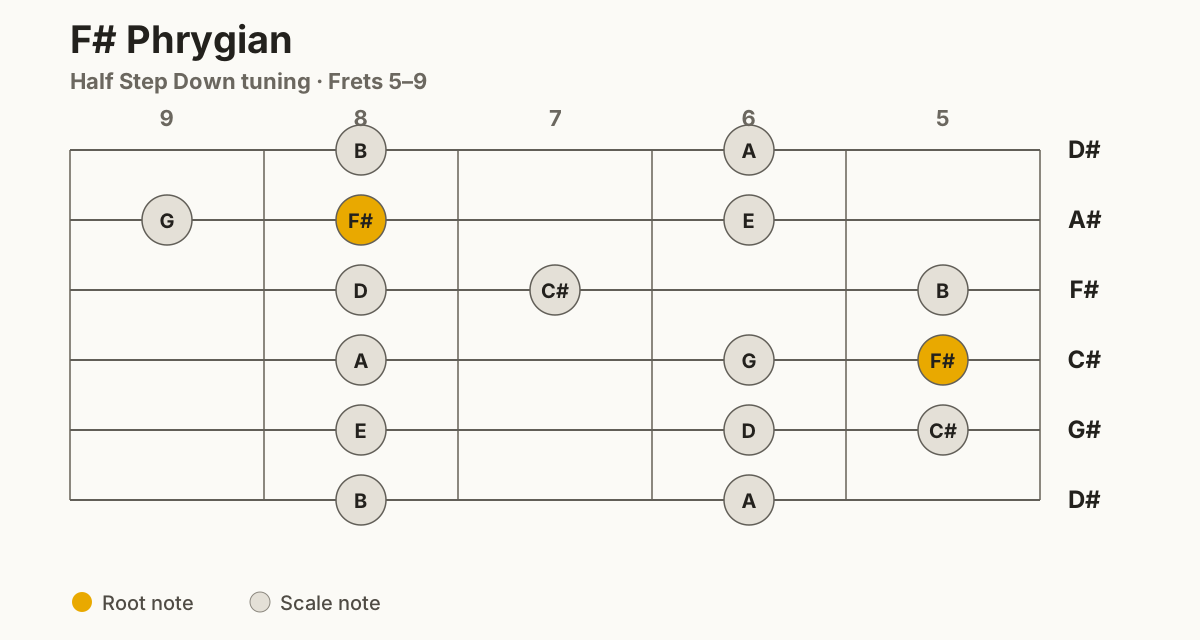
The TAB lists the shown note positions from low to high. Repeated pitches are different string positions. The highest-pitched string stays on the top line.
D#|------------------------------------------6--8--|
A#|---------------------------------6--8--9--------|
F#|------------------------5--7--8-----------------|
C#|---------------5--6--8--------------------------|
G#|------5--6--8-----------------------------------|
D#|6--8--------------------------------------------|
Frets 10–14
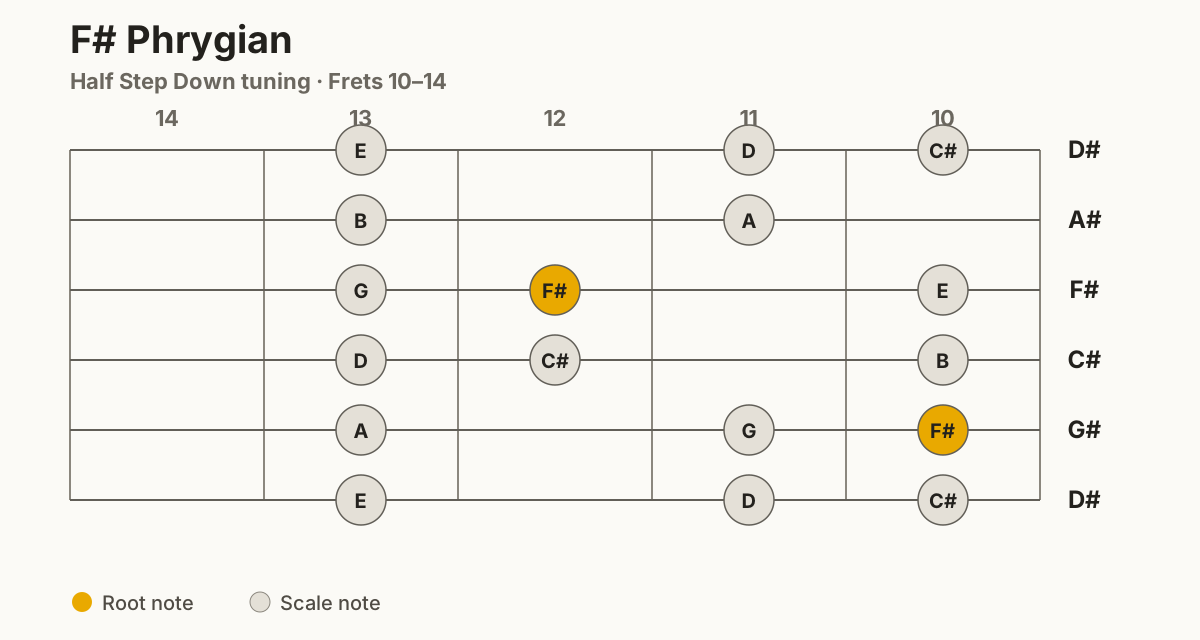
The TAB lists the shown note positions from low to high. Repeated pitches are different string positions. The highest-pitched string stays on the top line.
D#|------------------------------------------10-11-13-|
A#|------------------------------------11-13----------|
F#|---------------------------10-12-13----------------|
C#|------------------10-12-13-------------------------|
G#|---------10-11-13----------------------------------|
D#|10-11-13-------------------------------------------|
Frets 15–19
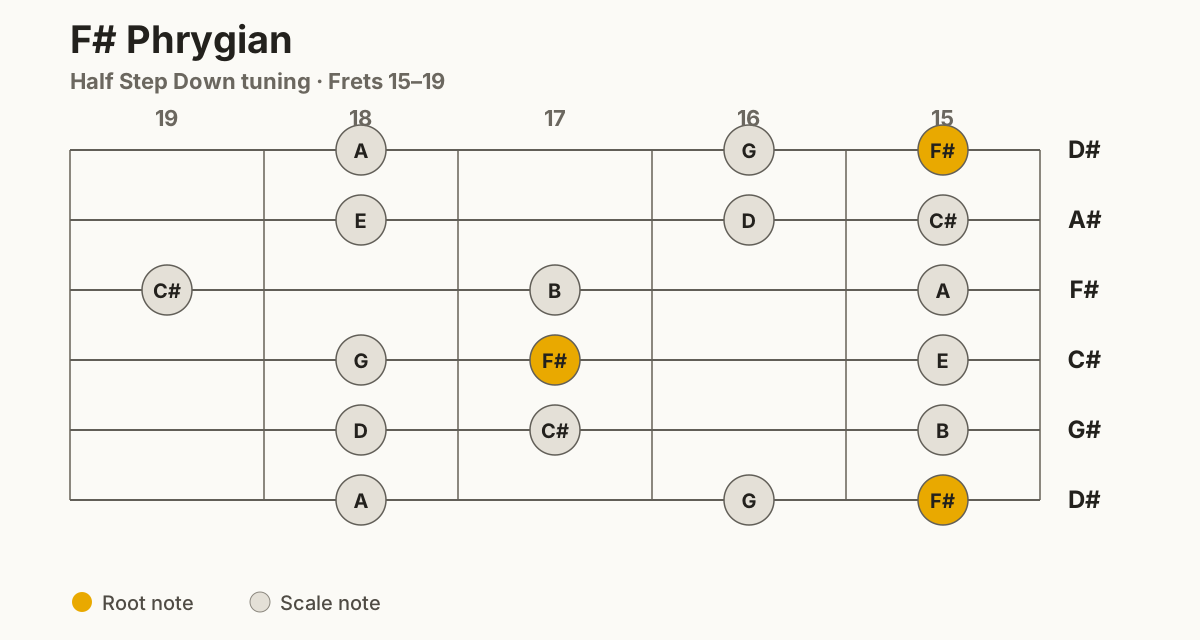
The TAB lists the shown note positions from low to high. Repeated pitches are different string positions. The highest-pitched string stays on the top line.
D#|---------------------------------------------15-16-18-|
A#|------------------------------------15-16-18----------|
F#|---------------------------15-17-19-------------------|
C#|------------------15-17-18----------------------------|
G#|---------15-17-18-------------------------------------|
D#|15-16-18----------------------------------------------|
Frets 18–22
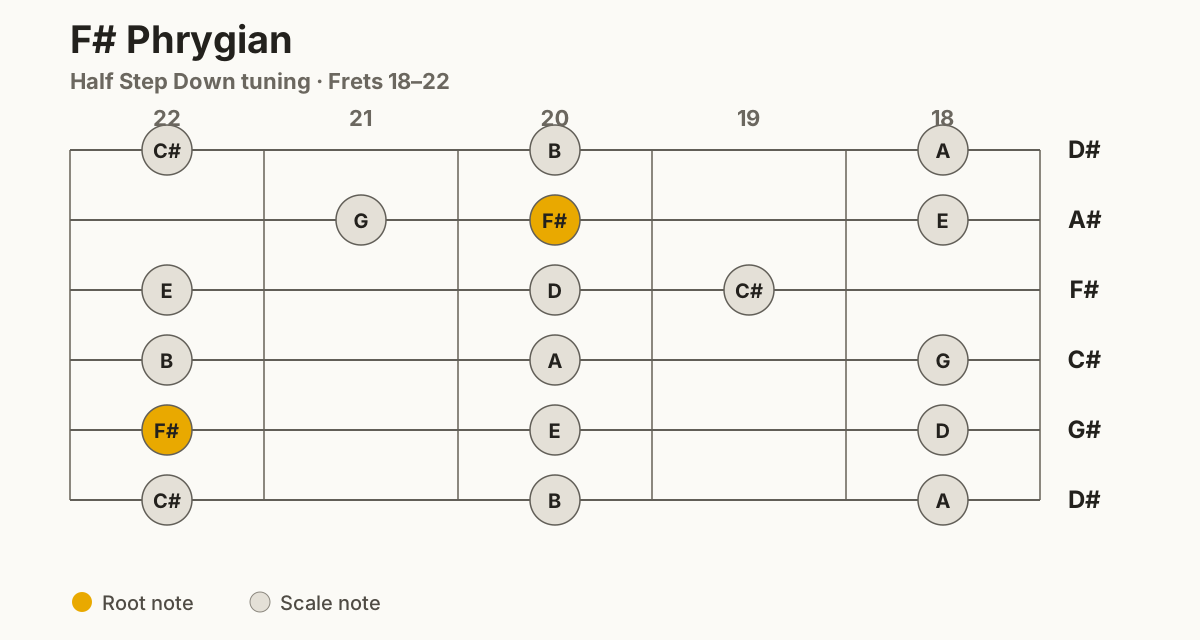
The TAB lists the shown note positions from low to high. Repeated pitches are different string positions. The highest-pitched string stays on the top line.
D#|---------------------------------------------18-20-22-|
A#|------------------------------------18-20-21----------|
F#|---------------------------19-20-22-------------------|
C#|------------------18-20-22----------------------------|
G#|---------18-20-22-------------------------------------|
D#|18-20-22----------------------------------------------|
Full neck · frets 0–22
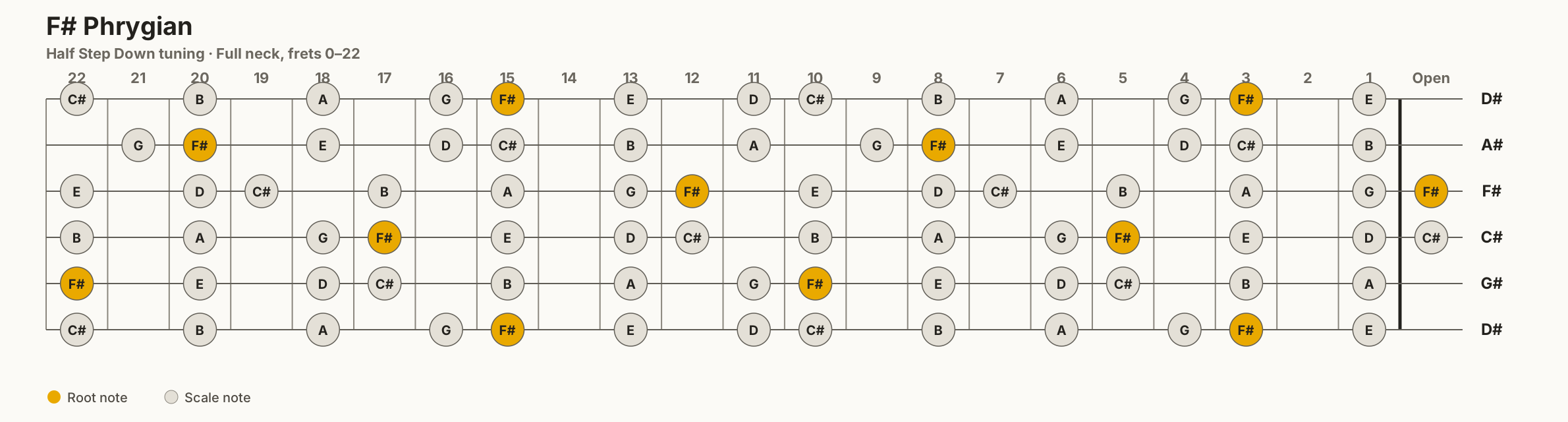
This is a reference map of the whole neck. Choose a smaller fret range for its matching practice TAB.
On a small screen, swipe within the chart or TAB to see the whole range. Start at the string labels on the right of the chart.
What you are playing
Scale notes: F#, G, A, B, C#, D, E. Standard tablature stays unchanged, so you can use the same note order as any mainstream lesson or transcription.
The diagram labels use sharp note names. Equivalent names such as D# and Eb identify the same fret; a theory book may use the flat spelling for the same pitch.
Practise it for ten minutes
Play Frets 0-4 slowly up and down. Say the root note F# each time it appears, then repeat the pattern with a steady pulse.
- Start Here: Start with the frets 0-4 view. That window gives you a manageable note map without implying that it is a conventional numbered scale box.
- Hear The Color: Lean on G so the darker, tighter Phrygian sound stays obvious.
- Chart Check: Read the string labels before playing. High strings run across the top of these horizontal scale charts, low strings across the bottom, and the nut is on the right.
- Half Step Down Watchpoint: Keep the same mirrored shape logic as standard tuning and listen for the softer string response. It keeps your lefty chart recognition intact while changing the feel under both hands.
Matching chords
These chords use notes from this scale in the same tuning. Try one chord, then a short scale phrase.
Explore this scale on the fretboard · How to read the scale charts · Check your tuning · All scale charts by tuning