
D Blues in C Standard tuning uses D, F, G, G#, A, C. The highlighted notes show D, the tonic. Start with the displayed fret range and practise a short phrase that returns to D.
Explore the scale
Choose a fret range to see its notes and matching TAB. These are fret windows, not conventional numbered scale boxes.
Formula: 1 b3 4 b5 5 b7.
Frets 0–4
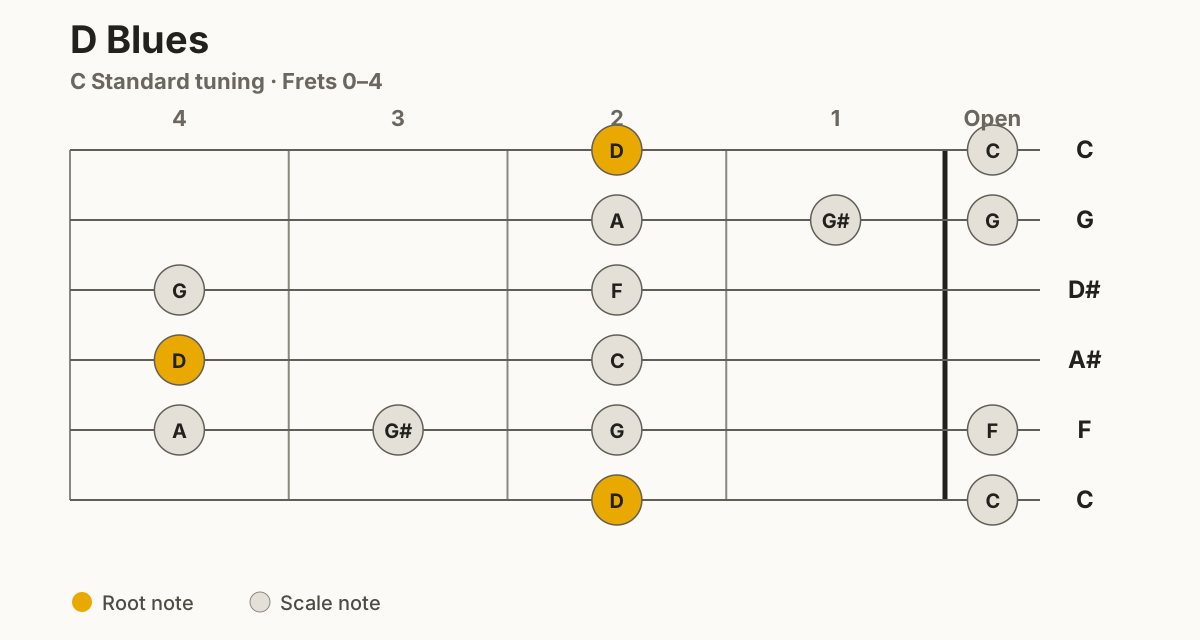
The TAB lists the shown note positions from low to high. Repeated pitches are different string positions. The highest-pitched string stays on the top line.
C |---------------------------------------0--2--|
G |------------------------------0--1--2--------|
D#|------------------------2--4-----------------|
A#|------------------2--4-----------------------|
F |------0--2--3--4-----------------------------|
C |0--2-----------------------------------------|
Frets 5–9
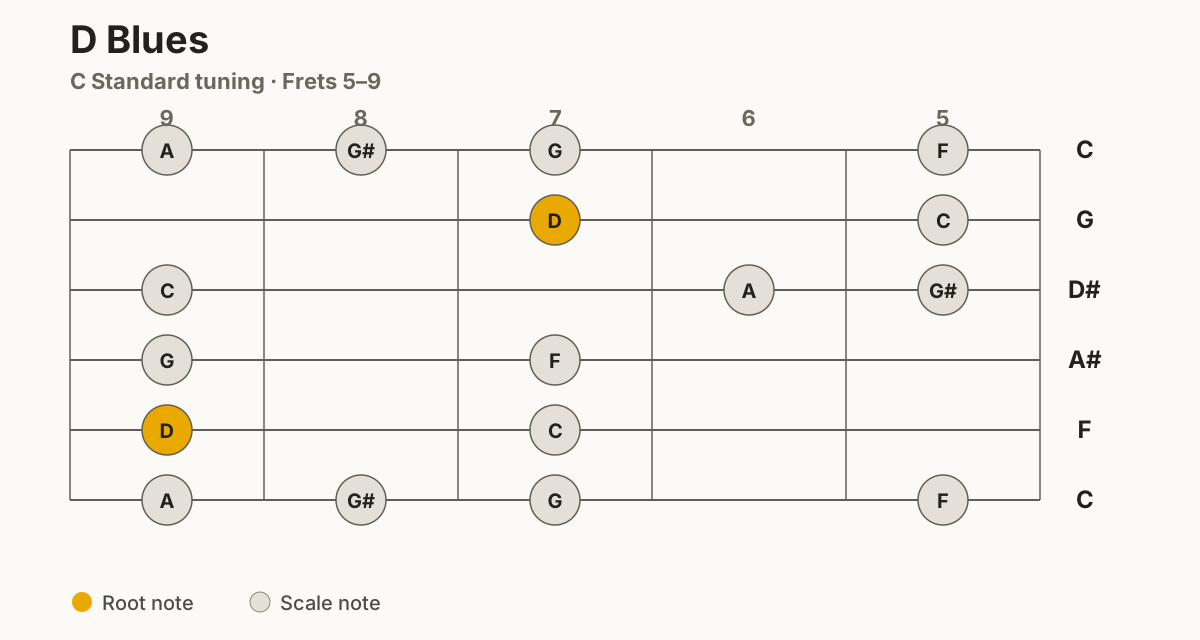
The TAB lists the shown note positions from low to high. Repeated pitches are different string positions. The highest-pitched string stays on the top line.
C |---------------------------------------5--7--8--9--|
G |---------------------------------5--7--------------|
D#|------------------------5--6--9--------------------|
A#|------------------7--9-----------------------------|
F |------------7--9-----------------------------------|
C |5--7--8--9-----------------------------------------|
Frets 10–14
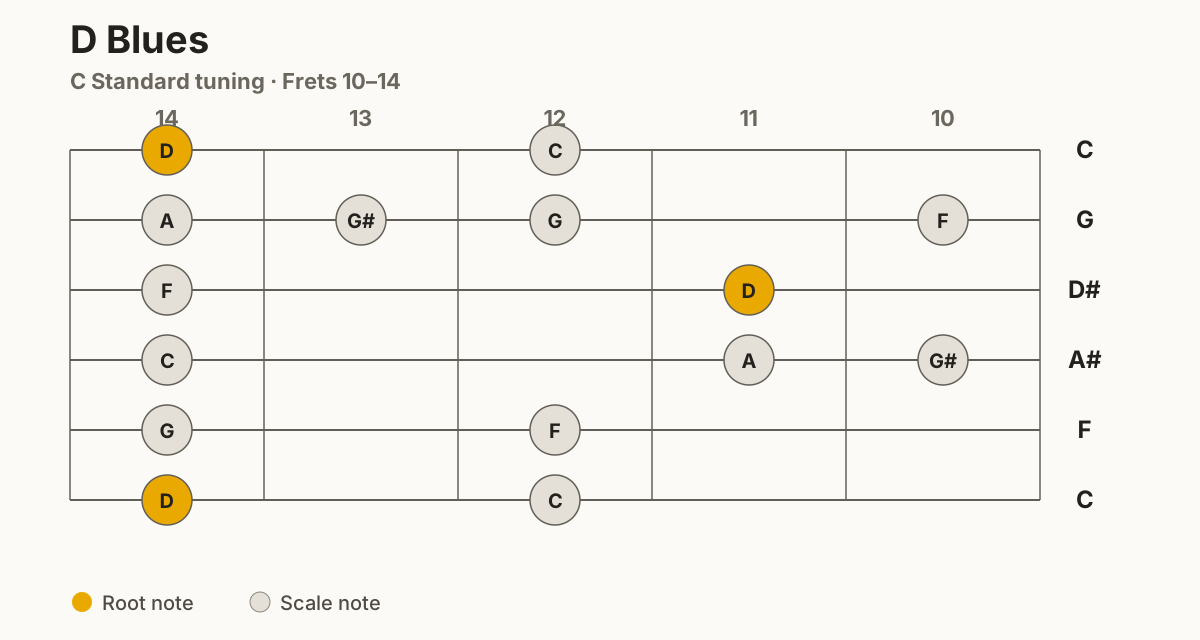
The TAB lists the shown note positions from low to high. Repeated pitches are different string positions. The highest-pitched string stays on the top line.
C |---------------------------------------12-14-|
G |---------------------------10-12-13-14-------|
D#|---------------------11-14-------------------|
A#|------------10-11-14-------------------------|
F |------12-14----------------------------------|
C |12-14----------------------------------------|
Frets 15–19
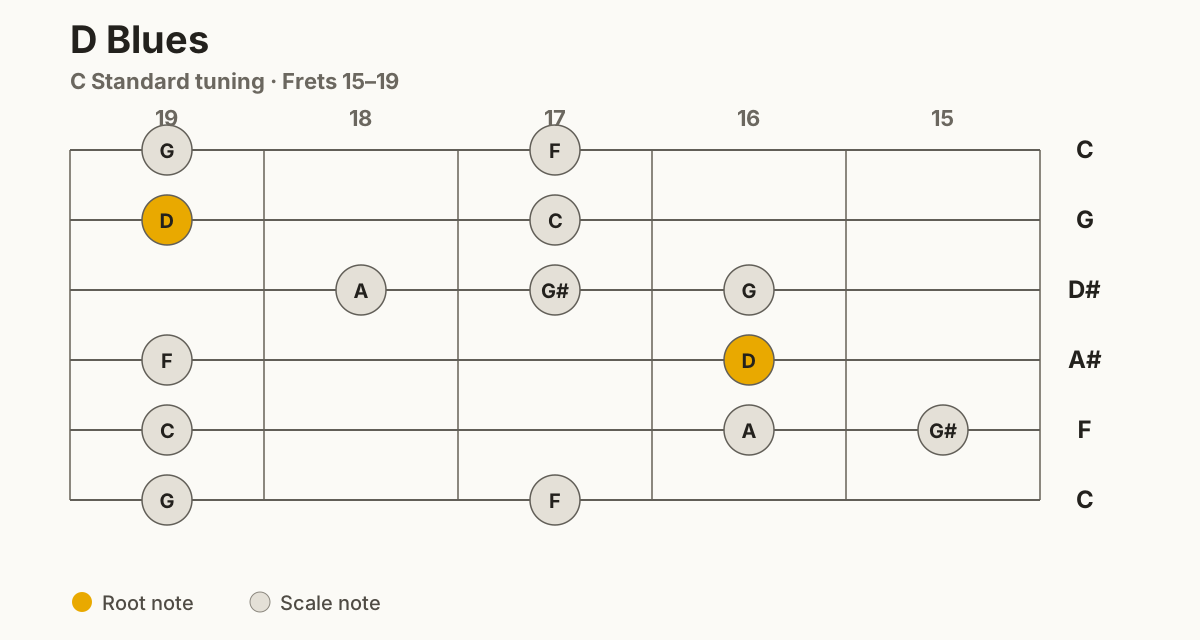
The TAB lists the shown note positions from low to high. Repeated pitches are different string positions. The highest-pitched string stays on the top line.
C |------------------------------------17-19-|
G |------------------------------17-19-------|
D#|---------------------16-17-18-------------|
A#|---------------16-19----------------------|
F |------15-16-19----------------------------|
C |17-19-------------------------------------|
Frets 18–22
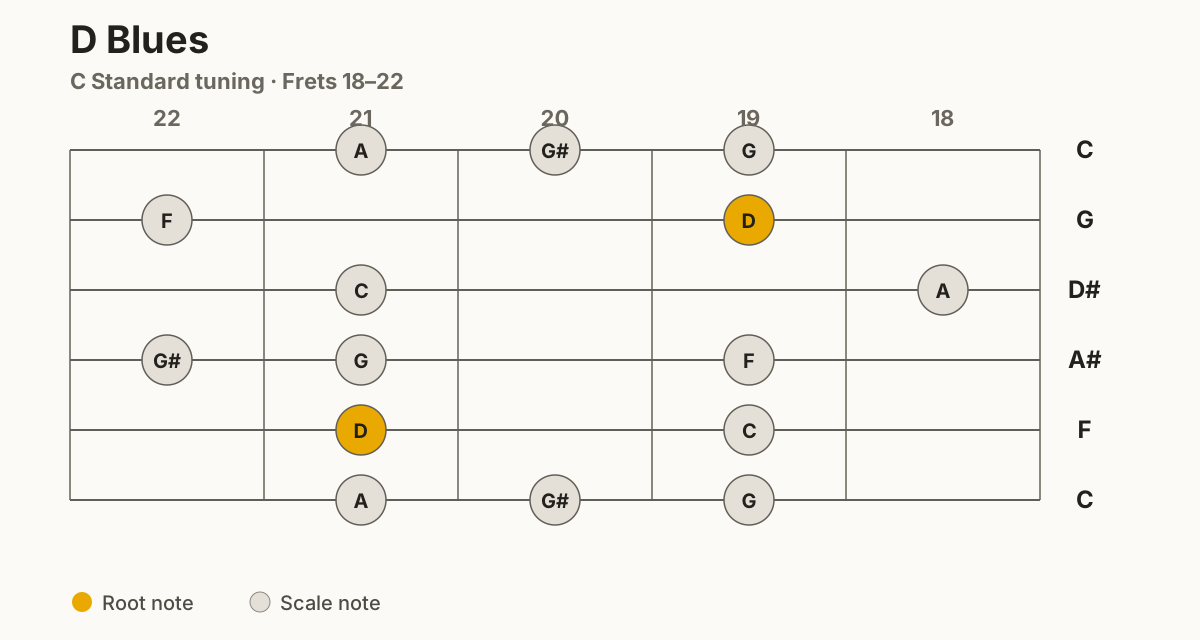
The TAB lists the shown note positions from low to high. Repeated pitches are different string positions. The highest-pitched string stays on the top line.
C |------------------------------------19-20-21-|
G |------------------------------19-22----------|
D#|------------------------18-21----------------|
A#|---------------19-21-22----------------------|
F |---------19-21-------------------------------|
C |19-20-21-------------------------------------|
Full neck · frets 0–22
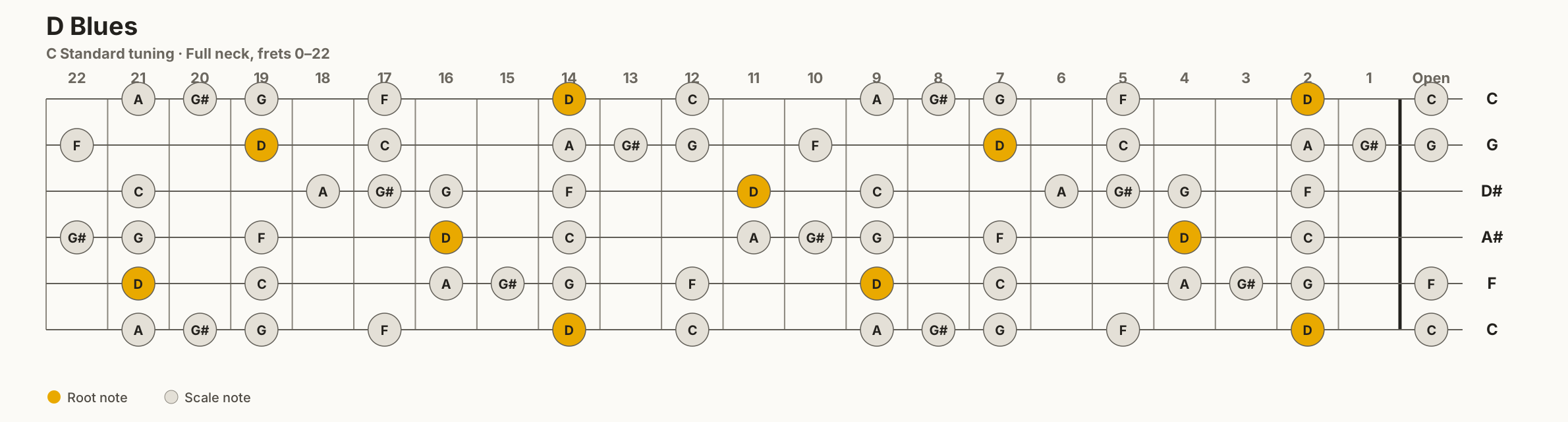
This is a reference map of the whole neck. Choose a smaller fret range for its matching practice TAB.
On a small screen, swipe within the chart or TAB to see the whole range. Start at the string labels on the right of the chart.
What you are playing
Scale notes: D, F, G, G#, A, C. Standard tablature stays unchanged, so you can use the same note order as any mainstream lesson or transcription.
The diagram labels use sharp note names. Equivalent names such as D# and Eb identify the same fret; a theory book may use the flat spelling for the same pitch.
Practise it for ten minutes
Play Frets 0-4 slowly up and down. Say the root note D each time it appears, then repeat the pattern with a steady pulse.
- Start Here: Start with the frets 0-4 view. That window gives you a manageable note map without implying that it is a conventional numbered scale box.
- Hear The Color: Treat G# as tension notes that want a deliberate resolution, not as notes to sit on carelessly.
- Chart Check: Read the string labels before playing. High strings run across the top of these horizontal scale charts, low strings across the bottom, and the nut is on the right.
- C Standard Watchpoint: Treat it like standard tuning with a heavier response under the hands and use the mirrored chart to check bass-side navigation. It keeps the same shape logic while delivering a heavier voice.
Matching chords
These chords use notes from this scale in the same tuning. Try one chord, then a short scale phrase.
Explore this scale on the fretboard · How to read the scale charts · Check your tuning · All scale charts by tuning